Urticaria, not a very common word but it is a common condition, affecting up to 1 in 5 people at some point in their lives. It comes from the Latin word ‘urtica’ meaning nettle, stinging nettle, and is linked to the Latin verb ‘urere’ meaning to burn.
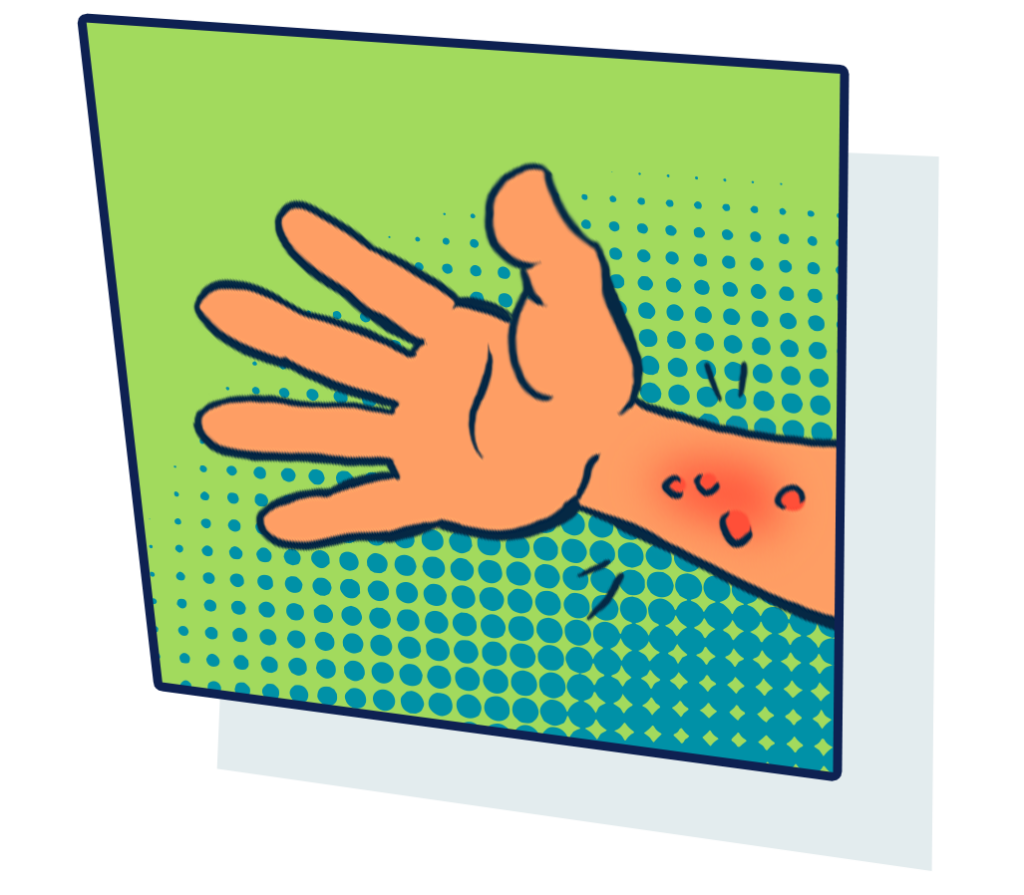
Easy to see how the name came about when we think how urticaria looks – just like nettle rash with raised itchy red bumps on the skin – also known as hives. The small, raised areas known as wheals are white or red with a red surround known as flare.
Urticaria can appear anywhere on the body and is referred to as acute meaning it clears within 6 weeks, quite often within hours, or chronic where the rash persists longer than 6 weeks, sometimes on and off for years. The main symptom of urticaria is itchy skin and although visibly it can look unpleasant, it does not usually have a direct effect on general health.
The Itch of Hives: What’s Causing It?
The reason urticaria is so itchy is because it is a reaction caused when the body releases histamine in response to a trigger and other chemicals from cells in the skin called mast cells. This reaction leads to a rash/hives and itch.
The itch reflex is a response generated by our brain; the reflex to itch is to scratch. This is a protective response when we used to scratch to remove parasites from our skin. Although it is unusual in modern times to suffer with parasites, the brain still carries the reflex and even the slightest movement of our hair is enough to trigger an itch.
One may not always know the reason for the reaction, and the rash could clear on its own. Some of the common causes include eating certain foods, physical reasons such as cold, heat, sweaty skin from exercise or friction, allergic reactions from contact with certain plants, pets or chemicals, or a reaction to a medicine or insect bite. An antihistamine, such as Zirtek, can help ease the symptoms of urticaria by blocking histamine receptors and relieving the itch.